
A single well-chosen painting can set the mood for an entire room. Animal art is one of the most adaptable ways to do it – crossing every decorating style, from spare and modern to warm and bohemian, depending on subject, palette, and execution.
They bring something alive into a space without demanding maintenance, rearranging, or watering. Here are 10 types of animal paintings matched to the rooms where they do their best work.
Why Animal Paintings Work in Any Home
The science is direct. According to GBD Magazine, biophilic design – incorporating nature imagery into built spaces – can reduce stress by up to 20%, and the global biophilic design market is forecast to reach $3.14 billion by 2028 at a 10.2% CAGR from 2023.
Fortune Business Insights valued the global wall art market at USD 66.89 billion in 2025, with residential decor accounting for 70.5% of industry revenue. Animal imagery sits at the center of that growth because it’s personal and emotionally resonant in a way that abstract geometric prints often aren’t.
For collectors who want original work rather than mass-produced prints, paintings of animals offer depth and texture that reproductions can’t match – brushwork, layering, and surface quality that digital print collapses into flat ink.
1. Bold Wildlife Portraits for Living Rooms and Feature Walls
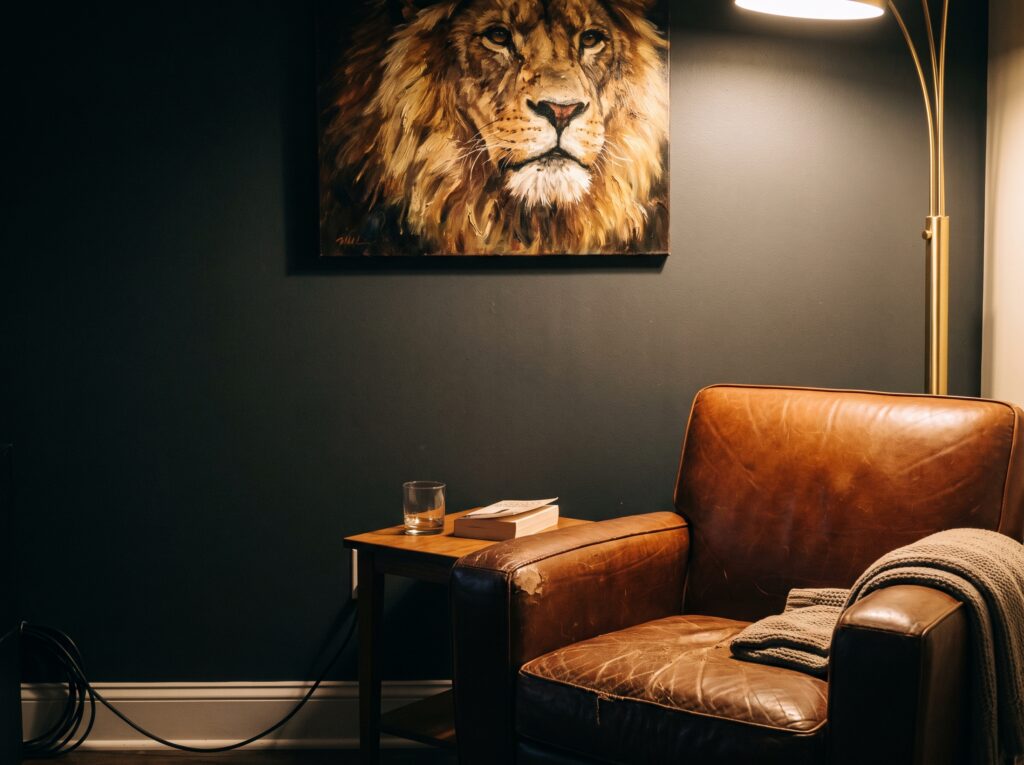
High-energy animal portraits styled in the “Animalcore” trend bring boldness and vitality to rooms designed for entertaining.
Lions, elephants, leopards, and bears work best as large-format paintings on feature walls – high-contrast, close-cropped, with the eye locked onto the subject. Wildlife photographer Anette Mossbacher named “Animalcore” as a top wildlife and nature wall art trend for 2026: deliberate, attention-holding portraiture designed as a room’s centerpiece.
These paintings suit dark-painted accent walls, industrial or modern eclectic furniture, and strong directional lighting. Slim black or dark walnut frames keep the energy focused on the image.
2. Horse Paintings for Open-Plan Living and Dining Spaces
Horses bridge rustic and contemporary aesthetics comfortably. A running horse in an impressionistic style reads differently than a classical portrait study, and both can work depending on the palette and format.
In open-plan layouts, horse paintings handle scale well – compositional movement reads clearly from a distance, which matters when you’re viewing art from across a kitchen island. Warm browns and ochres complement wood tones; cooler greys suit contemporary palettes with stone, white oak, and matte metals.
3. Bird Watercolors for Bedrooms and Reading Nooks
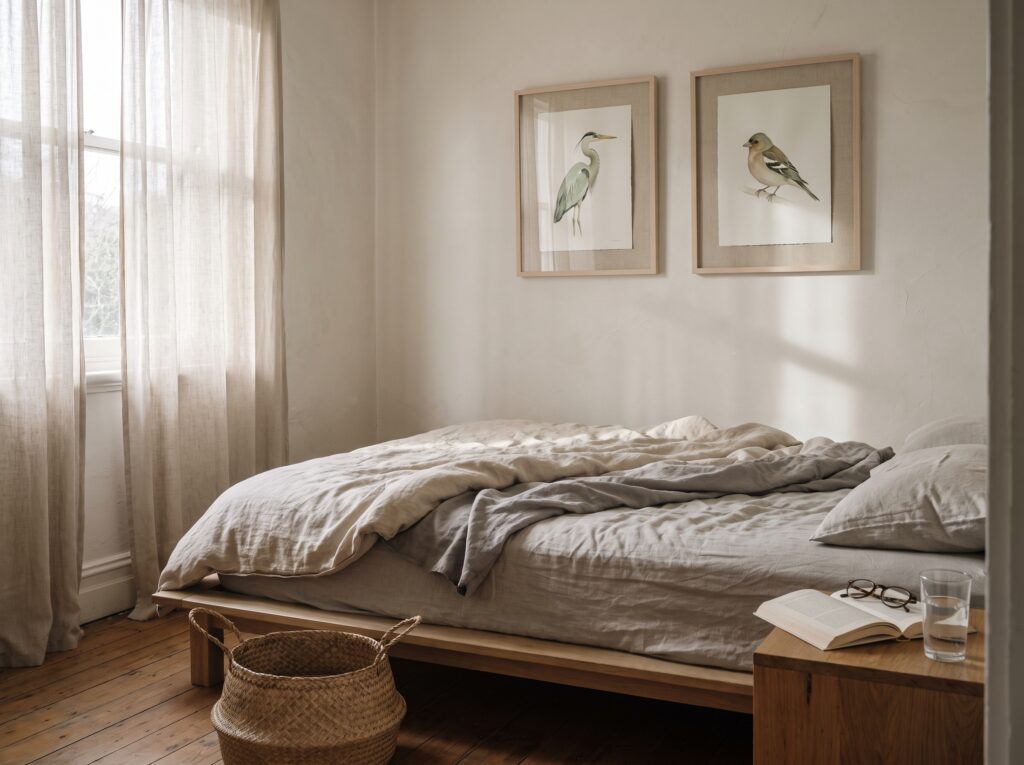
Gentle bird paintings in watercolor tones create a serene atmosphere suited to bedrooms and reading corners.
Soft-palette bird paintings – finches, doves, herons, kingfishers – don’t command; they suggest. Anette Mossbacher’s 2026 trends report identifies “Biophilic 2.0” as the calming counterpart to Animalcore: gentle wildlife scenes suited to bedrooms, bathrooms, and reading nooks.
A natural linen mat with a thin gold or pale wood frame keeps the watercolor feeling airy. If you’re refreshing a bedroom on a budget, our guide to refreshing interiors with small changes covers pairing art choices with other low-cost updates.
4. Abstract Animal Art for Contemporary and Minimalist Rooms
In minimalist or contemporary interiors, a realistic painting might feel too literal. Abstract and semi-abstract animal paintings – geometric forms, loosely blocked color, impressionistic suggestion – sit between pure abstraction and representation without tipping either way.
A 2025 Frontdoor survey cited by Grand View Research found 56% of Americans prefer minimalist aesthetics. In rooms that already prioritize clean lines, an abstract animal painting earns its place by adding organic movement without visual noise. Monochrome abstract forms work especially well in home offices and hallways.
5. Marine and Ocean Animal Art for Bathrooms and Coastal Rooms
Fish, whales, turtles, and octopus paintings bring depth to water-adjacent spaces. A bathroom, beach house bedroom, or coastal dining room gains something when the wall art extends rather than contradicts the room’s palette.
One practical note: in humid spaces, choose canvas or metal prints over unprotected paper – framed paper warps in rooms with poor ventilation. Navy, soft teal, white, and sand tones pair naturally with ocean subjects.
6. Pet Portraits for Entryways and Family Rooms
Commissioned and original dog and cat paintings are growing faster than almost any other art sub-category. According to Grand View Research’s 2025 global wall art market report, over 60% of consumers prefer personalized or bespoke art over mass-produced alternatives – and a pet portrait is about as personal as wall art gets.
Art Basel’s 2025 Survey of Global Collecting found a 20% year-over-year increase in decorative arts sales in the first half of 2025, driven largely by millennial collectors drawn to personalized art objects.
Placement works well in entryways or in family rooms as a gallery wall anchor.
7. African Wildlife Paintings for Eclectic and Bohemian Interiors
Giraffes, zebras, and rhinos carry high visual texture by nature – patterns on the animals themselves translate into paintings with built-in surface richness. That suits interiors that already layer textiles, materials, and organic shapes.
Bohemian rooms with rattan chairs, linen throws, and woven baskets absorb African wildlife art without conflict. The art reads as part of a considered, collected aesthetic rather than a single decorating decision. Our guide to home decor that balances beauty and function covers building rooms where individual pieces feel coherent rather than accidental.
8. Fox and Forest Animal Art for Rustic and Cottagecore Rooms
Woodland animals – foxes, deer, owls, rabbits – are closely tied to interiors that favor warmth and natural materials. Cottagecore and “quiet luxury” aesthetics provide a natural home for illustrated and painterly woodland art.
These paintings pair with exposed brick, raw wood shelving, dried botanical arrangements, and warm neutral paint. For rooms where you want a genuinely nature-rich corner, layering a woodland painting with real greenery extends the effect. Our Pothos care guide covers one of the easiest trailing plants to position alongside art in low-light corners.
9. Exotic Animal Art for Kids’ Rooms and Playful Spaces
Flamingos, toucans, and tropical animals in bright, graphic palettes are naturals for children’s rooms. The argument for illustrated or painterly styles over cartoon prints is longevity – a more artistic toucan or chameleon can grow from a nursery into a teenager’s room without looking out of place. Simple thin frames or frameless canvas make rearranging easy as the room’s use changes.
10. Monochrome Animal Studies for Home Offices and Hallways
Black-and-white and sepia animal paintings – owls, wolves, eagles, stags – project quiet authority without competing with the functional objects in a room. That makes them well-suited to home offices, where visual noise distracts, and hallways, where you need impact at a glance.
Anette Mossbacher’s 2026 report identifies “Soft Modernity” – monochrome and low-saturation nature art – as a named trend best suited to minimalist and office-adjacent spaces. The palette pairs with leather furniture, dark timber desks, matte black hardware, and linen or concrete wall textures.
How to Choose the Right Animal Painting
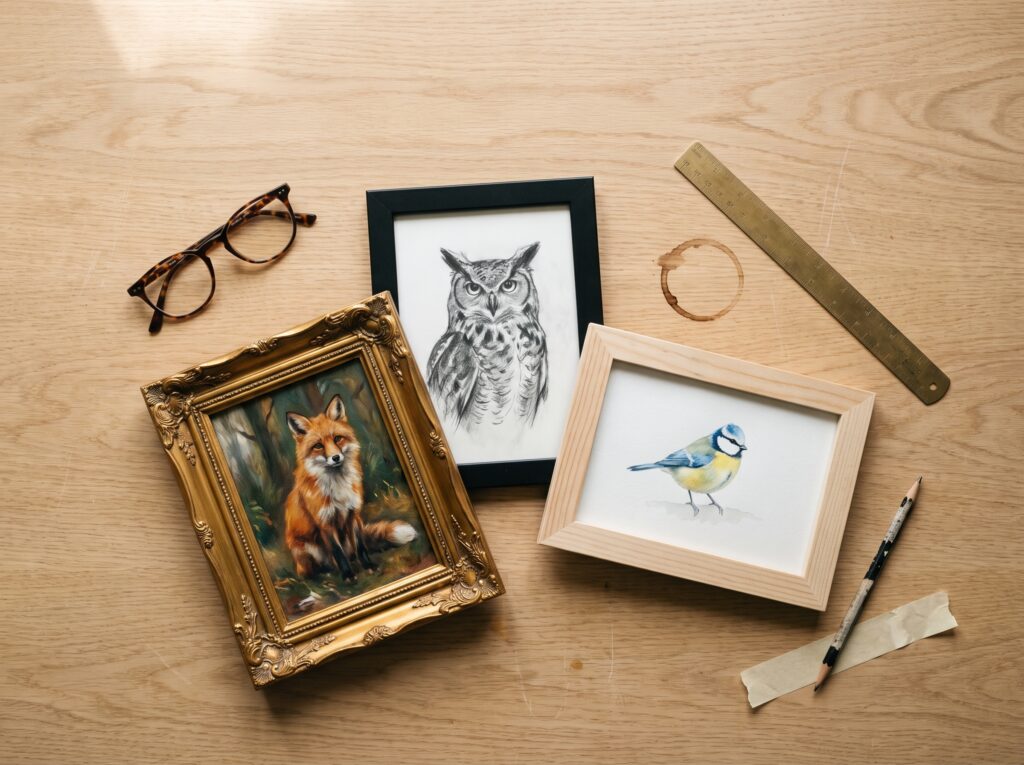
Frame style determines whether an animal painting reads as rustic, contemporary, or classic.
Three filters handle most decisions:
Room function: Active, social rooms handle bold, high-contrast paintings well. Restful spaces work better with quieter palettes and smaller scale.
Color palette: The painting doesn’t need to match the room’s scheme exactly, but it shouldn’t fight it. Confirm one color from the room appears somewhere in the painting.
Wall scale: The standard guide is that framed art should span roughly two-thirds of the furniture below it. For feature walls without furniture reference, aim for a piece that occupies a third to a half of the available wall width.
On originals versus prints: prints are a practical entry point, but original paintings bring visible brushwork, texture, and surface variation that flat reproductions don’t carry. For a piece that will be a room’s focal point, that difference shows.
Finding the Right Piece for Your Space
Animal paintings are one of the most adaptable and emotionally direct categories of home art – and a $66.89 billion global wall art market in 2025 confirms that homeowners know it. The range of styles, subjects, and formats is broad enough that any room has a version that fits.
The key is matching the painting to the room’s purpose rather than just its palette. Get that match right, and the painting stops being decoration and starts being the thing that makes the room feel complete.